You can feel healthy, remain active and still have insulin resistance.
That is what makes it easy to overlook. Insulin resistance and prediabetes frequently develop without clear warning signs, while changes in blood glucose may only become apparent through testing.
This matters particularly in India. The ICMR-INDIAB study estimated that approximately 136 million people in India had prediabetes in 2021, in addition to around 101 million people living with diabetes.1
The encouraging message is that identifying risk early creates an opportunity to act. This guide explains what insulin resistance means, how it differs from prediabetes, who may be at higher risk, which tests doctors use and what practical steps may support healthier blood glucose regulation.
What is insulin resistance?
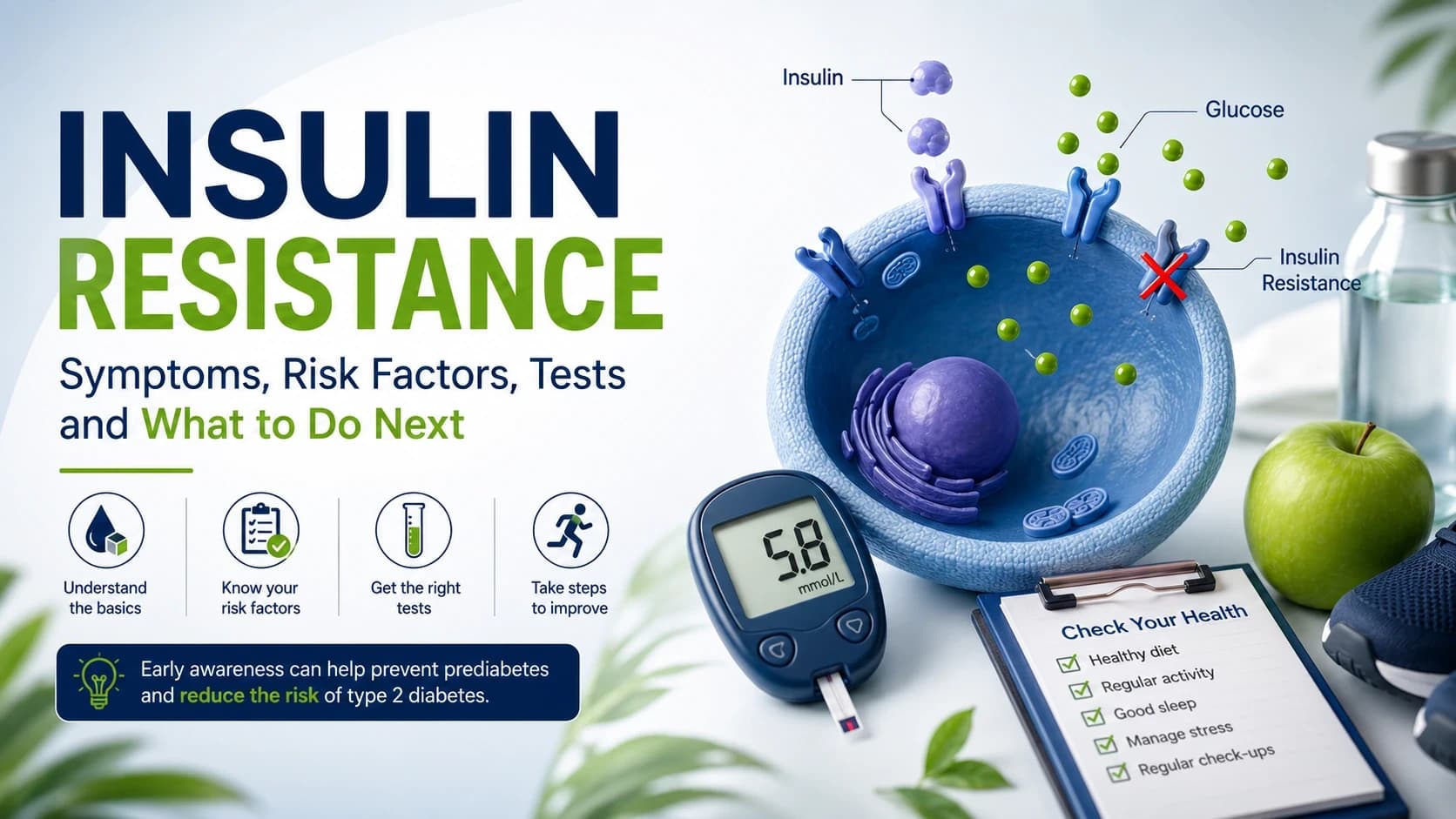
Insulin is a hormone produced by the pancreas. One of its main functions is to help glucose move from the bloodstream into muscle, fat and other cells, where it can be used or stored as energy.
Insulin also signals the liver to regulate how much glucose it releases into the blood.
With insulin resistance, these tissues do not respond to insulin as effectively as they should. The pancreas initially compensates by producing more insulin. This additional insulin may keep blood glucose within the normal range for some time.
As insulin resistance progresses, however, the pancreas may become unable to maintain enough insulin output to overcome the reduced response. Blood glucose can then begin to rise.
This progression may move through several stages:
- Reduced response to insulin
- Compensatory production of more insulin
- Gradual elevation of blood glucose
- Prediabetes
- Type 2 diabetes in some individuals
Not everyone with insulin resistance will develop type 2 diabetes. Genetics, body composition, physical activity, sleep, diet, medical conditions, medicines and other factors influence individual risk.
Insulin resistance and prediabetes are not the same thing
These terms are often used interchangeably, but they describe different concepts.
Insulin resistance is a physiological condition in which the body's tissues respond inadequately to insulin.
Prediabetes is defined by blood glucose or HbA1c results that are higher than the healthy range but below the diagnostic range for diabetes.
A person can have insulin resistance while standard blood glucose tests remain normal because the pancreas is still producing enough additional insulin to compensate.
There is also no single routinely recommended clinical test that directly diagnoses insulin resistance in the general population. Direct measurements are mainly used in research. In everyday medical practice, doctors usually evaluate blood glucose, HbA1c, lipid levels, blood pressure, waist measurements, medical history and other risk indicators.2
This is why an isolated “fasting insulin” result or an online insulin-resistance calculator should not be treated as a diagnosis without clinical interpretation.
Why insulin resistance often causes no symptoms
Insulin resistance and prediabetes are often called “silent” because many people do not feel noticeably unwell.
During the early stages, the pancreas may maintain normal or near-normal glucose by releasing more insulin. There may be no pain, sudden change in energy or obvious physical sign.
Some people learn about their risk only after:
- A routine health examination
- An elevated fasting glucose or HbA1c result
- Testing for PCOS or fertility concerns
- A diagnosis of high blood pressure or abnormal cholesterol
- A history of gestational diabetes
- A workplace or community screening programme
Feeling well is valuable, but it does not confirm that blood glucose is within a healthy range.
What are the possible signs of high blood sugar?
Insulin resistance itself may not cause noticeable symptoms. When glucose levels become sufficiently elevated, symptoms associated with hyperglycaemia or diabetes may appear.
Possible signs include:
- Increased thirst
- Frequent urination
- Increased hunger
- Unusual tiredness
- Blurred vision
- Slow-healing wounds
- Recurrent infections
- Unexplained weight loss
These symptoms are not specific to diabetes and may have other causes. They should therefore lead to medical evaluation rather than self-diagnosis.
Do not wait for symptoms before discussing testing if you already have important risk factors.
Who is more likely to develop insulin resistance?
Insulin resistance is influenced by a combination of genetic, metabolic, hormonal, behavioural and environmental factors.
1. A larger waistline or excess visceral fat
Fat stored around the abdominal organs is metabolically active. It may release fatty acids and signalling molecules that interfere with insulin action and promote inflammation.
Body mass index can be useful as a screening measurement, but it does not show where fat is stored or fully describe metabolic risk. Someone can have a “normal” BMI and still carry excess abdominal fat or have other metabolic risk factors.
2. Physical inactivity
Skeletal muscle is one of the body's largest sites for glucose use. Regular movement allows muscles to take up and use glucose more effectively.
Long periods of sitting can also contribute to poor metabolic health, even in people who complete an occasional structured workout.
3. Family history
Having a parent or sibling with type 2 diabetes may increase risk. This reflects both inherited susceptibility and shared environmental or lifestyle factors.
4. Increasing age
Risk generally rises with age, although insulin resistance, prediabetes and type 2 diabetes can also occur in younger adults, adolescents and children.
5. Polycystic ovary syndrome
PCOS is frequently associated with insulin resistance. Women with PCOS may benefit from individualized assessment of glucose status, blood pressure, cholesterol and other metabolic markers.
6. Previous gestational diabetes
A history of diabetes during pregnancy is an important predictor of future prediabetes and type 2 diabetes. Ongoing screening after pregnancy is therefore important.
7. High blood pressure or abnormal blood lipids
Elevated blood pressure, high triglycerides and reduced HDL cholesterol can occur alongside insulin resistance as part of a broader cardiometabolic pattern.
8. Sleep apnea and insufficient sleep
Obstructive sleep apnea is associated with metabolic dysfunction. Chronic sleep restriction, irregular sleep and untreated sleep disorders may also make blood glucose regulation more difficult.
9. Certain medicines
Long-term use of glucocorticoids and some antipsychotic, immunosuppressive or other medicines can affect blood glucose.
Never stop a prescribed medicine because of this possibility. A doctor can determine whether monitoring or an alternative treatment is appropriate.
10. Smoking
Smoking and exposure to tobacco products are associated with greater cardiometabolic risk. Stopping smoking supports cardiovascular, respiratory and metabolic health.
When should you consider getting tested?
India's National Programme for Prevention and Control of Non-Communicable Diseases includes population-based screening for adults aged 30 years and above. Earlier or more frequent testing may be appropriate when individual risk factors are present.3
Speak with a healthcare professional about blood glucose testing when:
- You are 30 or older and have not been screened
- You have symptoms that could indicate elevated glucose
- A parent or sibling has type 2 diabetes
- You have overweight, obesity or a larger waistline
- You have high blood pressure or abnormal cholesterol
- You have PCOS
- You previously had gestational diabetes
- You have sleep apnea
- You take medicines that can elevate glucose
- A previous test showed elevated blood sugar
- You are planning pregnancy after gestational diabetes
- Your doctor recommends monitoring because of another health condition
Screening recommendations should always be individualized. Age alone should not be the only consideration.
Which tests are used for prediabetes and diabetes?
Doctors commonly use one or more of the following laboratory tests.
| Test | Prediabetes range | Diabetes range* | What it measures |
|---|---|---|---|
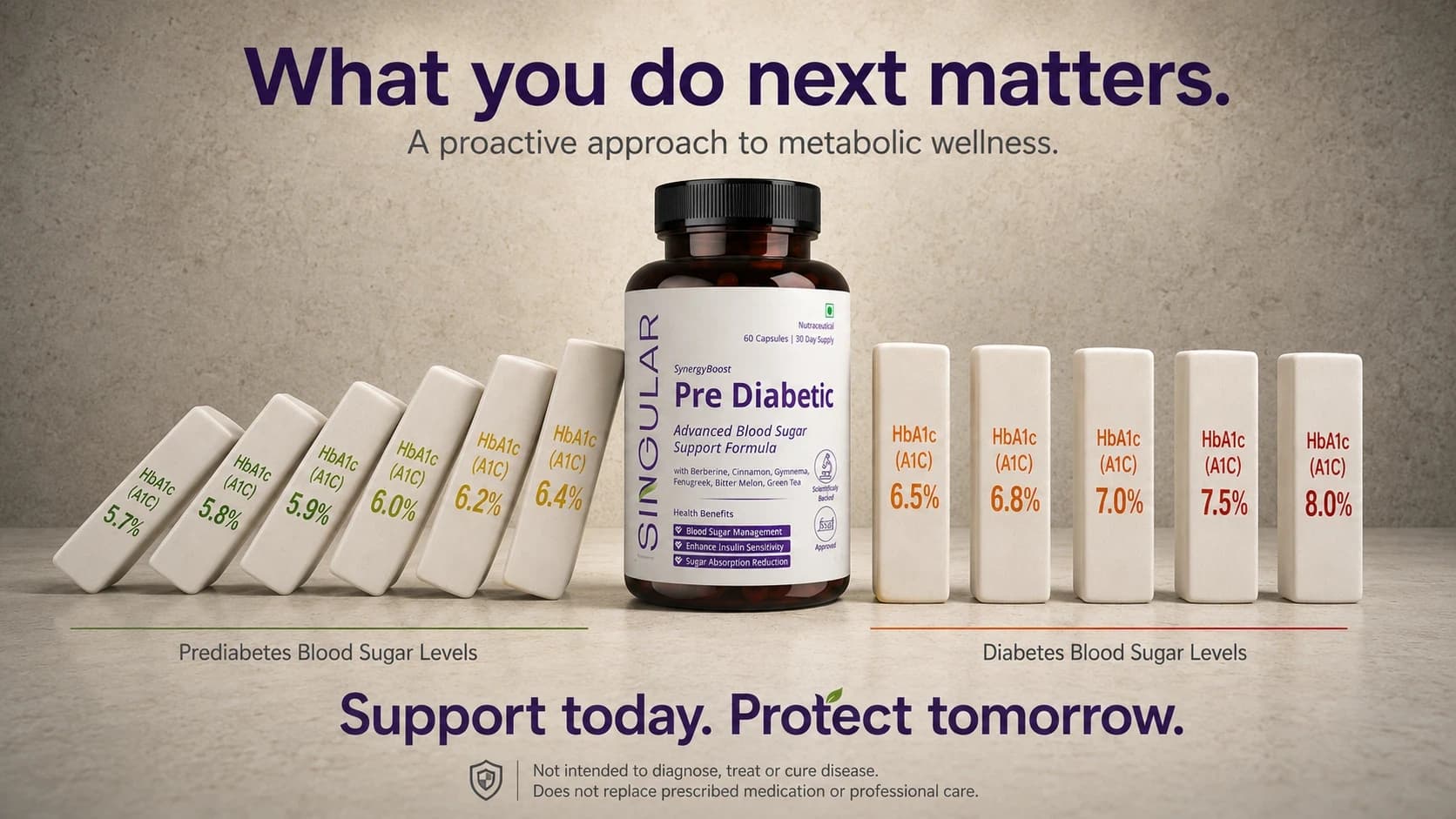
| HbA1c | 5.7%–6.4% | 6.5% or above | Approximate average glucose over the previous 2–3 months |
| Fasting plasma glucose | 100–125 mg/dL | 126 mg/dL or above | Glucose after fasting for at least eight hours |
| 2-hour oral glucose tolerance test | 140–199 mg/dL | 200 mg/dL or above | Response two hours after a standard glucose drink |
*In someone without unequivocal symptoms, an abnormal result normally requires confirmation according to clinical guidance.4
HbA1c
HbA1c measures the percentage of haemoglobin with glucose attached to it. It does not require fasting and offers a longer-term picture than a single glucose result.
However, HbA1c may be less reliable in some circumstances, including certain anaemias, haemoglobin variants, recent blood loss, pregnancy and some kidney or liver conditions. A clinician may recommend a glucose-based test when HbA1c does not match the clinical picture.
Fasting plasma glucose
This test measures glucose after an overnight fast. It is widely available but reflects glucose at one point in time and may be influenced by recent illness, stress, sleep or medicines.
Oral glucose tolerance test
The OGTT measures the body's response to a defined glucose load. It can identify impaired glucose handling that may not appear on a fasting test, although it takes longer and requires more preparation.
Can a home glucose meter diagnose diabetes?
No. A home meter can be useful for monitoring people who have already been advised to check glucose, but diabetes and prediabetes should be diagnosed using appropriate laboratory testing and clinical assessment.
What should you do if your result is in the prediabetes range?
A prediabetes result is not a reason for panic, but it should not be ignored.
Your next steps may include:
- Confirming or repeating the test
- Reviewing blood pressure, cholesterol and triglycerides
- Assessing waist measurement and weight history
- Reviewing sleep, activity, diet, smoking and alcohol intake
- Checking medicines that may affect glucose
- Creating an individualized lifestyle plan
- Discussing whether medication is appropriate
- Agreeing on a schedule for repeat testing
The most effective plan is not necessarily the most restrictive one. It is the plan that is medically appropriate and sustainable.
Can lifestyle changes improve insulin sensitivity?
Lifestyle intervention can substantially reduce diabetes risk in people with prediabetes.
In the landmark Diabetes Prevention Program, an intensive lifestyle intervention targeting at least 150 minutes of weekly physical activity and approximately 7% weight reduction lowered the incidence of type 2 diabetes by 58% over about three years compared with placebo.5
That finding does not mean everyone needs to lose exactly 7% of body weight or that weight loss is the only goal. Individual plans should account for baseline weight, muscle mass, age, medical conditions, medications, mobility and cultural food preferences.
The evidence supports several practical priorities.
Move regularly
Adults should work toward 150–300 minutes of moderate-intensity aerobic activity per week, or an equivalent amount of vigorous activity, along with muscle-strengthening activity on at least two days.6
Moderate activity generally means your breathing becomes faster, but you can still speak in sentences.
Walking, cycling, swimming, dancing, household activity and structured exercise can all contribute.
Begin gradually when you are inactive. Even short activity sessions and movement breaks can help build consistency.
Break up long periods of sitting
Stand, stretch or walk for a few minutes at regular intervals. Movement does not have to happen only inside a gym.
Examples include:
- Walking after meals
- Standing during phone calls
- Taking stairs when appropriate
- Completing short mobility sessions
- Walking for five minutes between work blocks
Build and preserve muscle
Resistance exercise helps maintain muscle, which is an important site of glucose disposal.
Strength training may include weights, resistance bands, body-weight movements, chair-supported exercises or supervised rehabilitation, depending on your ability.
Choose meals that support glucose regulation
There is no single “insulin-resistance diet” that is ideal for everyone.
A balanced approach generally emphasizes:
- Vegetables and minimally processed plant foods
- Adequate protein
- Pulses, beans and lentils
- Whole grains in suitable portions
- Nuts and seeds
- Fruit rather than fruit juice
- Healthy sources of unsaturated fat
- Fewer sugar-sweetened drinks
- Less frequent consumption of highly refined, energy-dense foods
Meal quality matters, but portion size, meal timing, sleep, activity and the overall dietary pattern also influence blood glucose.
For an Indian diet, improvements do not require abandoning familiar foods. A dietitian can help adjust portions and combinations of rice, roti, millet, dal, vegetables, curd, fruit and other regional foods while maintaining nutritional adequacy.
Prioritize sleep
Aim for a regular sleep schedule and discuss persistent snoring, choking during sleep, severe daytime sleepiness or suspected sleep apnea with a doctor.
Avoid smoking
Stopping tobacco use supports cardiovascular health and reduces several major risks that commonly overlap with diabetes.
Monitor progress realistically
Useful progress markers may include:
- Improved glucose or HbA1c
- Lower waist measurement
- Better blood pressure
- Healthier triglyceride and HDL levels
- Improved strength and stamina
- Better sleep quality
- More consistent daily movement
Progress should be assessed over weeks and months, not judged by one meal or one glucose reading.
Are supplements a substitute for testing or medical care?
No supplement can determine whether someone has insulin resistance, prediabetes or diabetes.
Some botanical compounds and nutrients are being investigated for their effects on glucose metabolism, but evidence varies substantially according to the ingredient, extract standardization, dose, study population, treatment duration and product quality.
Supplements may also interact with glucose-lowering medicines, anticoagulants, blood-pressure medicines or other treatments. Combining several glucose-lowering products could increase the possibility of hypoglycaemia in susceptible individuals.
Before using a metabolic-health supplement:
- Obtain appropriate testing
- Review the full formulation and dose
- Check the standardization of botanical extracts
- Discuss medicines and medical conditions
- Avoid products promising to “cure” diabetes
- Continue prescribed treatment unless your doctor changes it
Supplements should complement—not replace—nutrition, physical activity, sleep, clinical monitoring and appropriate medical care.
When is high blood sugar an emergency?
The following are not ordinary early symptoms of insulin resistance:
- Confusion or extreme drowsiness
- Fruity-smelling breath
- Fast, deep or difficult breathing
- Persistent vomiting
- Severe abdominal pain
- Inability to keep fluids down
- Very high glucose accompanied by worsening illness
- High ketone levels
These may indicate diabetic ketoacidosis or another acute medical emergency. Seek emergency medical care immediately.7
Do not attempt to manage severe symptoms through diet, exercise or supplements.
The most useful next step
You do not need to wait until you feel unwell.
When risk factors are present, a routine consultation and appropriate blood tests can provide clarity. When results are normal, they establish a useful baseline. When results are elevated, early action may reduce the chance of progression and identify related cardiovascular or metabolic concerns.
The goal is not fear. It is informed, timely action.
Start with these three steps
- Review your personal risk factors.
- Ask whether HbA1c, fasting glucose or another test is appropriate.
- Choose one sustainable action you can begin this week.
Frequently asked questions
Can a thin person have insulin resistance?
Yes. Body weight alone does not determine metabolic health. Genetics, abdominal fat distribution, muscle mass, physical activity, sleep, medications, PCOS and other factors can influence insulin sensitivity.
Does insulin resistance always become diabetes?
No. Progression is not inevitable. Risk varies, and sustained lifestyle changes, clinical monitoring and appropriate treatment may delay or prevent type 2 diabetes.
Is fasting insulin enough to diagnose insulin resistance?
Not usually. Fasting insulin is affected by laboratory method and biological variability, and there is no universally accepted clinical cutoff for diagnosing insulin resistance in the general population.
Is HbA1c more accurate than fasting glucose?
Neither test is universally superior. They measure different aspects of glucose regulation and may identify different people. A clinician may select or combine tests based on medical history and risk.
How often should someone with prediabetes be tested?
Testing frequency should be individualized. Many clinical guidelines recommend at least annual monitoring for people with confirmed prediabetes, while earlier retesting may be appropriate when results are close to the diabetes range or risk is changing.
Can walking after meals help?
Post-meal walking adds physical activity and may help reduce prolonged sitting. It can be a practical part of a broader movement plan, but it does not replace prescribed treatment or medical monitoring.
Can prediabetes return to the normal range?
Some people can achieve glucose values below the prediabetes range through sustained lifestyle change, weight management where appropriate and medical care. Continued monitoring remains important because future risk may still be elevated.
Take control through clarity
Insulin resistance often develops quietly, but it does not have to remain invisible.
Understanding your risk, obtaining appropriate testing and making gradual, sustainable changes can provide a more reliable path than waiting for symptoms.
Explore more evidence-led metabolic-health resources from SINGULAR, or speak with a qualified healthcare professional about your individual risk.
Medical disclaimer
This article is intended for general educational purposes only and is not a substitute for medical diagnosis, treatment or individualized advice. Seek guidance from a qualified healthcare professional before changing medicines, beginning a new exercise programme or using supplements—particularly during pregnancy or when you have diabetes, cardiovascular disease, kidney disease or another medical condition.