Singular Pre Diabetic is a 12-ingredient botanical and mineral formulation developed around pathways involved in glucose metabolism. This article examines the published science relating to those ingredients, including skeletal muscle glucose uptake, post-meal glucose handling and hepatic glucose production. Strictly, only the first of these is glucose disposal; the other two influence how much glucose enters the blood.
It also explains why the formulation uses standardised extracts at modest amounts and combines ingredients that act on different pathways. The studies discussed here tested individual ingredients, often in other preparations and at other doses, so their findings should not automatically be applied to this product.
Key Scientific Takeaways
- Prediabetes involves two problem sites. Impaired fasting glucose mainly reflects insulin resistance in the liver; impaired glucose tolerance mainly reflects insulin resistance in skeletal muscle [4].
- Glucose disposal happens mostly in muscle. Under insulin stimulation, about 80% of glucose uptake occurs in skeletal muscle, carried by the GLUT4 transporter, which insulin signalling or AMPK activation moves to the cell surface [6, 7, 8].
- Six of the ingredients have positive randomised trials in prediabetes, each at its own dose and preparation: curcumin, fenugreek, cinnamon, berberine, magnesium and bitter melon [16, 27, 31, 38, 44, 53]. Chromium's prediabetes trial was negative [24].
- Singular Pre Diabetic uses standardised extracts at lower amounts than those trials and combines ingredients that act on different pathways. This is a multi-target formulation rationale, not a demonstrated effect of the finished product.
Contents
- What Is Prediabetes?
- What Is Glucose Disposal?
- What Is a Glucose Disposal Agent?
- Singular Pre Diabetic: The 12-Ingredient Formulation
- Three Pathways Involved in Glucose Regulation
- Route 1: Glucose Uptake Into Skeletal Muscle
- Route 2: Glucose Absorption After Meals
- Route 3: Hepatic Glucose Production and Insulin Signalling
- Comparing Product Amounts with Published Research
- Standardised Extracts and the Multi-Target Formulation Rationale
- Lifestyle Measures and Prediabetes
- Frequently Asked Questions
- Scientific References
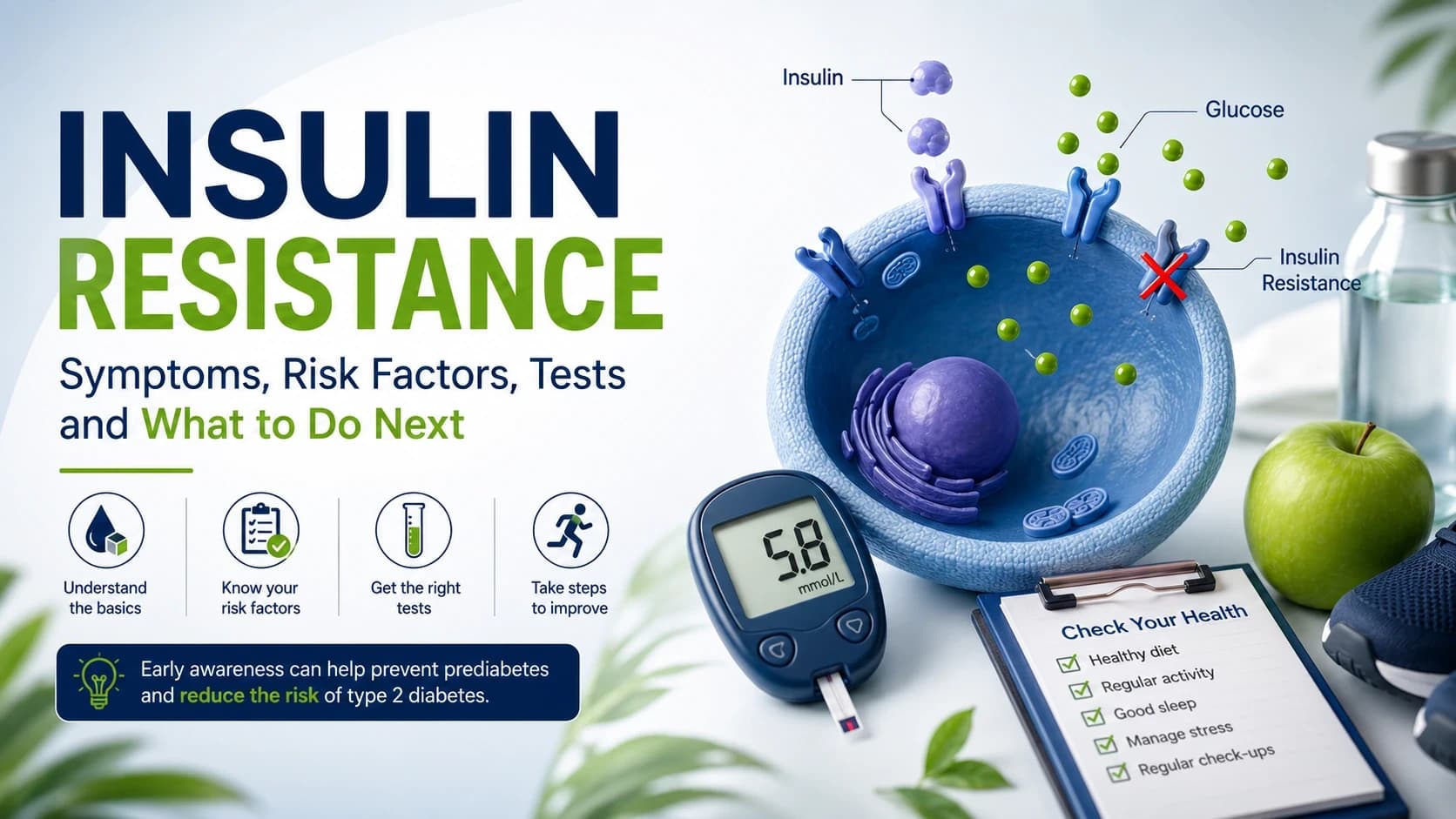
What Is Prediabetes?
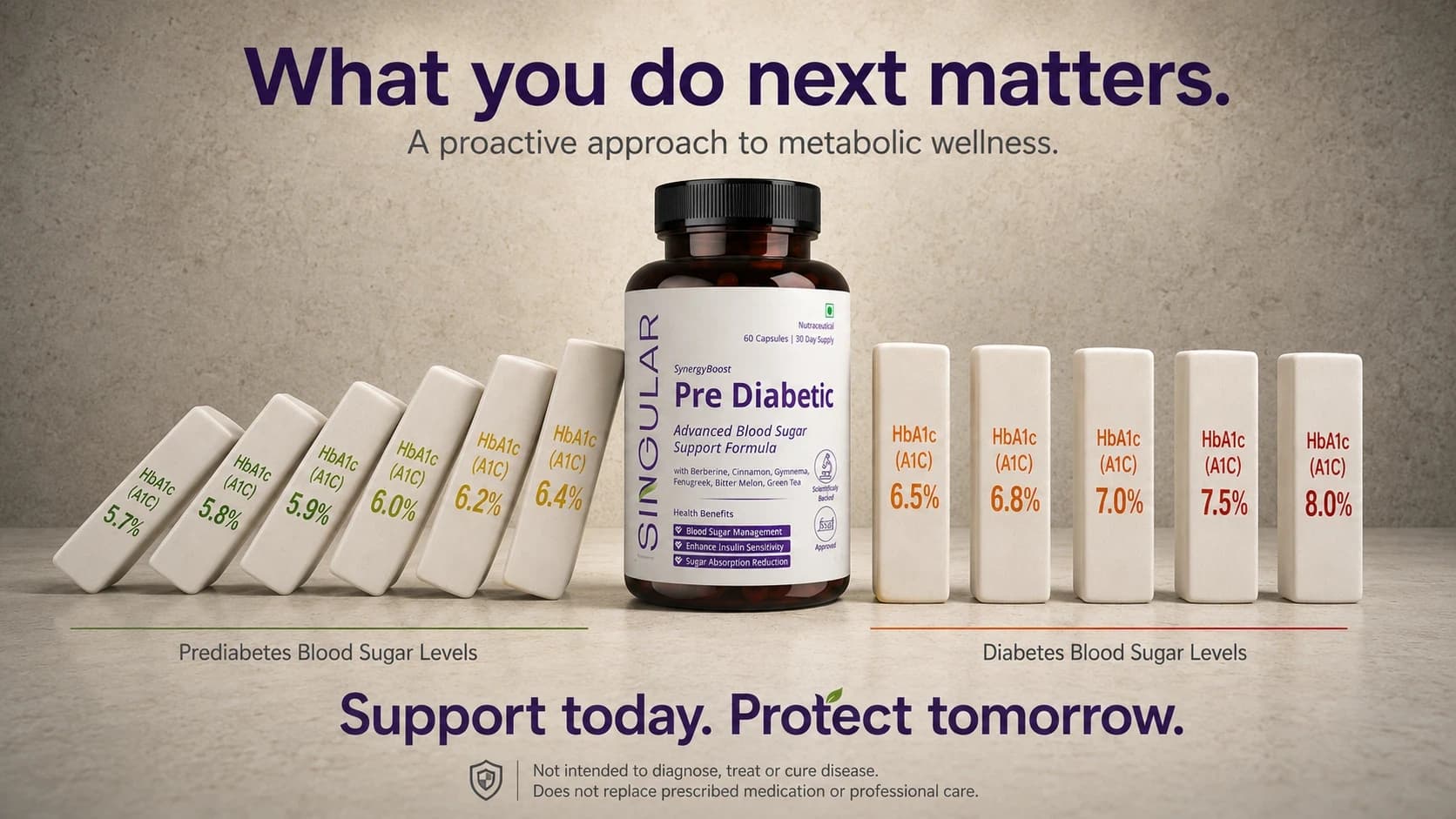
Prediabetes means blood glucose is higher than normal but has not reached the diabetes threshold. The American Diabetes Association defines it by any one of three tests [1]:
| Test | Normal | Prediabetes | Diabetes |
|---|---|---|---|
| Fasting plasma glucose (mg/dL) | below 100 | 100–125 | 126 or higher |
| 2-hour glucose after a 75 g oral glucose load (mg/dL) | below 140 | 140–199 | 200 or higher |
| HbA1c (%) | below 5.7 | 5.7–6.4 | 6.5 or higher |
The condition is common in India. The ICMR-INDIAB study tested 113,043 adults across 31 states and union territories between 2008 and 2020. It found a weighted prevalence of 15.3% for prediabetes and 11.4% for diabetes, using WHO criteria [2]. In many states with a lower human development index, people with prediabetes outnumbered people with diabetes [2].
Prediabetes is a crossroads, not a fixed state. Each year, 5–10% of people with prediabetes progress to diabetes, and a similar share return to normal glucose [3]. Insulin resistance and reduced beta-cell function are both present, and both begin before glucose values rise [3].
The two main forms of prediabetes fail in different places [4]:
- Impaired fasting glucose (IFG): severe insulin resistance in the liver, with near-normal muscle insulin sensitivity. The liver keeps releasing glucose overnight when it should slow down.
- Impaired glucose tolerance (IGT): marked insulin resistance in skeletal muscle, with milder liver resistance. Muscle fails to take up glucose efficiently after a meal.
Both forms show a weaker early burst of insulin after eating [4]. This split matters: a formulation designed around prediabetes needs to consider the liver, the muscle and the meal itself.
What Is Glucose Disposal?
Glucose disposal is the removal of glucose from the bloodstream into tissues, where it is burned for energy or stored as glycogen. Researchers measure it with the hyperinsulinaemic–euglycaemic clamp: insulin is infused, and the glucose infusion needed to hold blood glucose steady equals glucose uptake by all tissues [5].
Skeletal muscle is the main destination. Insulin-stimulated glucose transport into muscle is the major mechanism that lowers blood glucose after a carbohydrate meal, and GLUT4 is the transporter that carries it [6]. Under clamp conditions, about 80% of glucose uptake occurs in skeletal muscle [7].
GLUT4 waits inside the muscle cell until a signal moves it to the cell surface. Two main signals do this:
- The insulin route. Insulin binds its receptor and activates a cascade through PI3-kinase and Akt, which moves GLUT4 to the membrane [6]. In insulin resistance, this route is blunted [7].
- The energy-sensing route. Muscle contraction activates AMP-activated protein kinase (AMPK, a cellular energy sensor), calcium signalling and related pathways that move GLUT4 to the surface without needing insulin [8]. Exercise training also raises the amount of GLUT4 that muscle makes [8].
Disposal is only half of the balance. The other half is glucose appearance: glucose released by the liver and glucose absorbed from food. In type 2 diabetes and its precursors, the liver keeps producing glucose despite high insulin levels [7]. Lowering appearance and raising disposal both bring blood glucose down.
What Is a Glucose Disposal Agent?
"Glucose disposal agent" (GDA) is a sports-nutrition term for supplements that help move glucose into muscle. It is not a medical or regulatory category, and no regulator approves products as glucose disposal agents.
This article uses the physiology strictly. An ingredient acts on glucose disposal when research shows it increases glucose uptake into tissues or improves insulin sensitivity (Route 1 below). Ingredients that slow glucose absorption from meals or reduce liver glucose output act on glucose appearance instead (Routes 2 and 3). Singular Pre Diabetic combines ingredients from all three groups.
Singular Pre Diabetic: The 12-Ingredient Formulation
One serving is two vegetarian capsules, taken as one capsule twice daily, preferably with meals [9]. Extract amounts below are from the product label [9]. Standardisation percentages are Singular's raw-material specifications; they are not printed on the current label and have not been independently verified for this article. Marker-compound amounts are calculated from those two figures.
| Ingredient | Amount per 2-capsule serving (label) [9] | Standardised to (manufacturer specification) | Marker compound per serving (calculated) | Main pathway studied |
|---|---|---|---|---|
| Berberis aristata root extract | 225 mg | 97% berberine hydrochloride | About 218 mg berberine hydrochloride | Muscle uptake (AMPK); liver glucose output |
| Cinnamomum verum bark extract | 175 mg | 5% cinnamaldehyde | About 8.75 mg cinnamaldehyde | Insulin signalling; post-meal glucose |
| Gymnema sylvestre leaf extract | 167 mg | 75% gymnemic acids | About 125 mg gymnemic acids | Intestinal glucose absorption |
| Magnesium oxide | 166 mg | Mineral salt | About 100 mg elemental magnesium (magnesium oxide is about 60% magnesium by weight) | Insulin receptor signalling |
| Fenugreek (Trigonella foenum-graecum) seed extract | 150 mg | 50% 4-hydroxyisoleucine | About 75 mg 4-hydroxyisoleucine | Insulin secretion and signalling |
| Bitter melon (Momordica charantia) fruit extract | 125 mg | 10% charantin | About 12.5 mg charantin | Muscle uptake (AMPK, GLUT4) |
| Green tea (Camellia sinensis) leaf extract (labelled as tea catechins) | 125 mg | 50% EGCG | About 62.5 mg EGCG (not total catechins) | Muscle uptake (GLUT4) |
| Curcuma longa (turmeric) extract | 125 mg | 95% curcuminoids | About 119 mg curcuminoids | Liver glucose output; beta-cell function |
| Alpha-lipoic acid | 100 mg | Not applicable | 100 mg alpha-lipoic acid | Muscle uptake (insulin route) |
| Garlic (Allium sativum) extract | 75 mg | 1% allicin | About 0.75 mg allicin | Fasting glucose (mechanism not settled) |
| Piperine (Piper nigrum fruit extract) | 10 mg | 95% piperine | About 9.5 mg piperine | Absorption of curcumin (and possibly berberine) |
| Chromium picolinate | 200 mcg | Mineral salt | About 25 mcg elemental chromium, if the label figure refers to the salt (chromium picolinate is about 12.4% chromium by weight) | Insulin responsiveness |
Magnesium oxide is less well absorbed than other magnesium salts: in one bioavailability study its fractional absorption was about 4%, lower than magnesium chloride, lactate or aspartate [10]. The magnesium prediabetes trial described below used magnesium chloride [27].
Three Pathways Involved in Glucose Regulation
Blood glucose depends on how fast glucose enters the blood and how fast tissues remove it. The formulation groups its ingredients around three pathways:
- Route 1, glucose uptake into skeletal muscle: glucose disposal.
- Route 2, glucose absorption after meals: glucose appearance from food.
- Route 3, hepatic glucose production and insulin signalling: glucose appearance from the liver, together with insulin release.
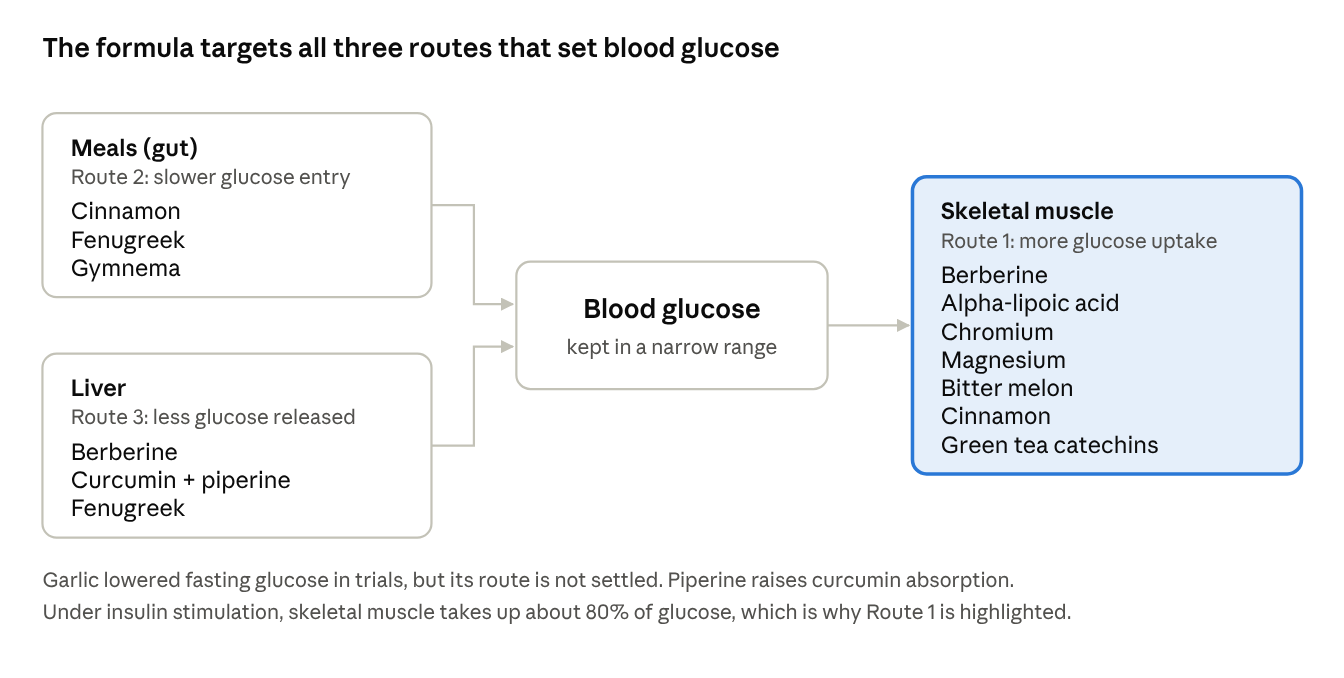
Three routes that set blood glucose · ingredients studied for each
Berberine, cinnamon and fenugreek each appear on two routes; no single ingredient covers all three, which is the rationale for combining them.
Route 1: Glucose Uptake Into Skeletal Muscle
Seven ingredients have been studied for their effects on glucose uptake into muscle or on insulin sensitivity, which is glucose disposal in the strict sense. Some act through the insulin route, others through the energy-sensing AMPK route that works even when insulin signalling is blunted.
Berberine (Berberis aristata)
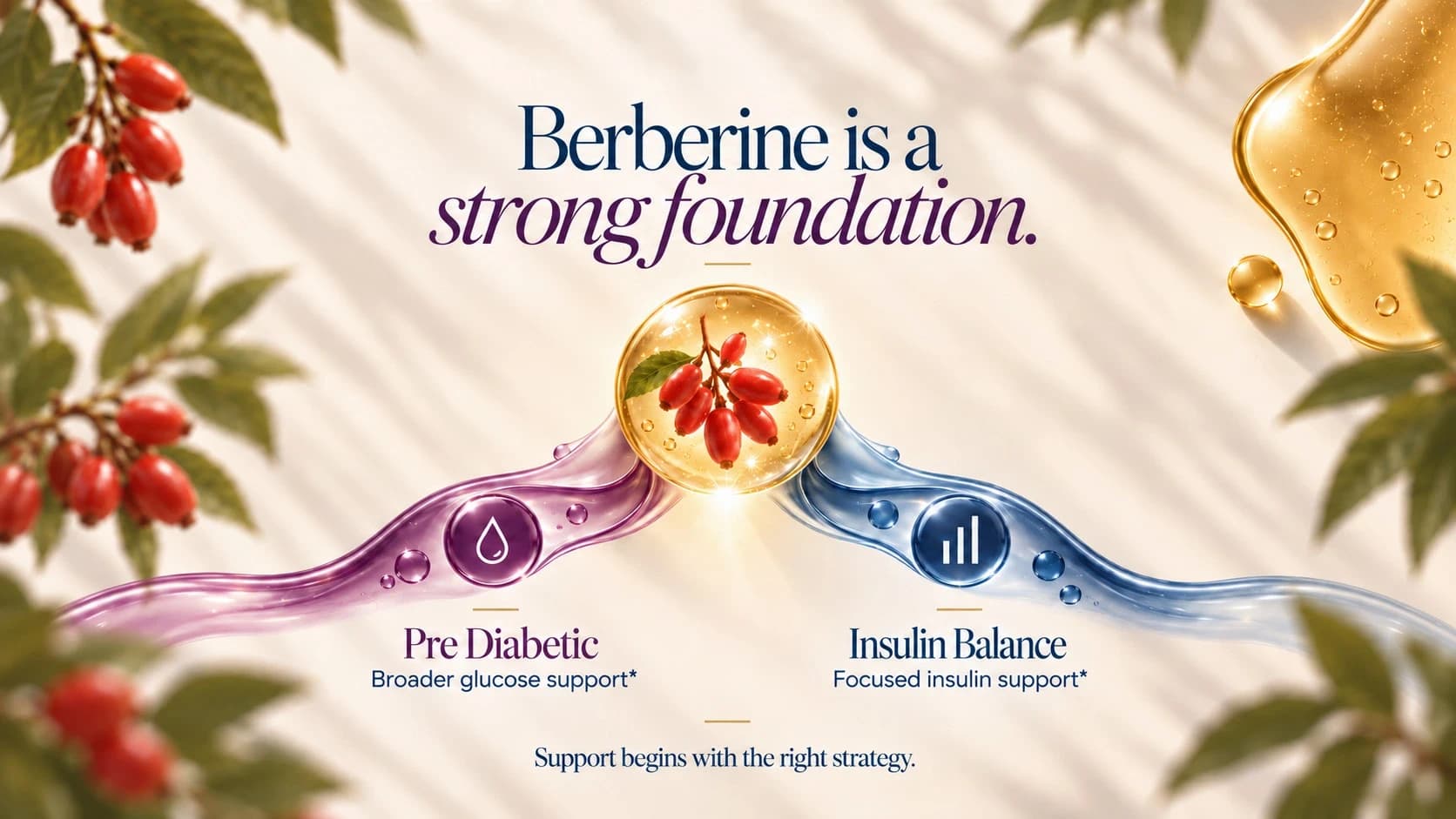
How it works. In muscle cells, berberine increased AMPK activity and moved GLUT4 to the cell surface through a route that does not depend on PI3-kinase, the insulin pathway's key step [11]. Berberine activates AMPK by mildly inhibiting mitochondrial complex I, a mechanism it shares with metformin [12].
Human evidence. In a 3-month pilot trial in newly diagnosed type 2 diabetes, berberine 0.5 g three times daily lowered glucose about as much as metformin at the same dose; HbA1c fell from 9.5% to 7.5% [13]. In a second group in that study, insulin resistance (HOMA-IR) fell by 44.7%, and 34.5% of participants had temporary digestive side effects [13]. A meta-analysis of 28 trials (2,313 patients with type 2 diabetes) found lower fasting glucose (−0.54 mmol/L) and post-meal glucose (−0.94 mmol/L) [14]. An umbrella review of meta-analyses in metabolic disorders found improvements in fasting glucose, HbA1c, insulin and HOMA-IR [15].
In prediabetes specifically, a 12-week pilot trial in 34 people used HIMABERB®, an aqueous Berberis aristata root extract standardised to at least 97% berberine hydrochloride, at 500 mg three times daily (1,500 mg a day). Fasting glucose fell from 6.75 to 5.33 mmol/L, HbA1c from 6.40% to 5.43%, and HOMA-IR from 3.61 to 2.41, with no serious adverse effects [16]. The trial was small and needs confirmation.
Alpha-Lipoic Acid
How it works. In muscle cells, alpha-lipoic acid raised glucose uptake to a level comparable with insulin, by moving GLUT1 and GLUT4 transporters to the cell surface [17]. Blocking PI3-kinase abolished the effect, showing it runs through the insulin signalling pathway [17].
Human evidence. Alpha-lipoic acid has the most direct glucose-disposal evidence of any ingredient here. In a clamp study in 13 people with type 2 diabetes, a single intravenous 1,000 mg dose raised insulin-stimulated glucose clearance by about 50% [18]. That intravenous result should not be read as the effect of oral doses. Taken orally at 600–1,800 mg daily for 4 weeks, alpha-lipoic acid raised insulin-stimulated glucose clearance by 27% versus placebo, with no difference between doses [19]. A meta-analysis of 24 trials in metabolic diseases found lower fasting glucose, insulin, HOMA-IR and HbA1c [20].
Chromium Picolinate
How it works. In muscle cells made insulin-resistant, chromium picolinate restored insulin-stimulated GLUT4 movement and glucose transport, and this effect depended on AMPK [21].
Human evidence. Results are mixed. A meta-analysis of 25 trials in diabetes found HbA1c 0.55 percentage points lower and fasting glucose 1.15 mmol/L lower, mainly at doses above 200 mcg of chromium daily, with no excess of adverse events [22]. In a clamp study at 1,000 mcg daily, chromium did not improve insulin action consistently; people who responded were the most insulin-resistant at baseline [23]. In people with impaired fasting glucose, impaired glucose tolerance or metabolic syndrome, 500 or 1,000 mcg daily for 6 months did not change glucose, insulin or HOMA-IR [24].
Chromium is best viewed as a supporting nutrient, not a primary driver.
Magnesium
How it works. Magnesium inside cells is needed for the tyrosine-kinase activity of the insulin receptor; low intracellular magnesium impairs insulin action and worsens insulin resistance [25]. Magnesium deficits are common in type 2 diabetes [25].
Human evidence. Across 13 cohort studies with 536,318 people, each extra 100 mg per day of magnesium intake was linked to a 14% lower risk of type 2 diabetes [26]. In a trial in 116 adults with prediabetes and low blood magnesium, 382 mg of elemental magnesium daily (as magnesium chloride) for 4 months lowered fasting glucose (86.9 versus 98.3 mg/dL with placebo) [27]. Glucose status improved in 50.8% of the magnesium group versus 7.0% on placebo [27]. A meta-analysis of 18 double-blind trials found that magnesium improved 2-hour glucose after a glucose load in people at high risk of diabetes [28].
Bitter Melon (Momordica charantia)
How it works. Cucurbitane triterpenoids isolated from bitter melon moved GLUT4 to the surface of muscle and fat cells and activated AMPK; they also improved glucose disposal in insulin-resistant mice [29].
Human evidence. In a 4-week trial in newly diagnosed type 2 diabetes, bitter melon 2,000 mg daily modestly lowered fructosamine, a short-term glucose marker; the effect was smaller than metformin 1,000 mg, and 500 or 1,000 mg daily had no significant effect [30]. In a crossover trial in 52 people with prediabetes in Tanzania, 2.5 g of bitter gourd powder daily for 8 weeks lowered fasting glucose by 0.31 mmol/L (5.6 mg/dL) versus control; people with higher starting glucose responded more [31]. Both trials used whole-fruit preparations, not a charantin-standardised extract.
Cinnamon (Cinnamomum verum): The Insulin-Mimetic Effect
How it works. A polymer from cinnamon acted like insulin in fat cells: it stimulated glucose uptake and glycogen synthesis, triggered phosphorylation of the insulin receptor, and worked synergistically with insulin [32]. Water-soluble type-A procyanidin polymers isolated from cinnamon raised insulin-dependent glucose metabolism roughly 20-fold in laboratory tests [33]. Human evidence for cinnamon is covered under Route 2.
Green Tea Catechins (Camellia sinensis)
How it works. In diabetic rats and mice, green tea increased glucose uptake into skeletal muscle and moved more GLUT4 to the cell surface; its main catechin, EGCG, improved glucose intolerance in obese mice [34].
Human evidence. The effect in people is small. A meta-analysis of 22 trials (1,584 people) found fasting glucose 1.48 mg/dL lower, with no change in insulin, HbA1c or HOMA-IR [35]. In healthy young men, green tea extract providing 366 mg of EGCG over 24 hours raised insulin sensitivity by 13% during a glucose tolerance test [36].
Route 2: Glucose Absorption After Meals
Slowing glucose absorption after meals reduces glucose appearance rather than increasing disposal, but it lowers the load that insulin-resistant muscle has to clear. Three ingredients have been studied for this effect.
Cinnamon (Cinnamomum verum)
How it works at a meal. In healthy volunteers, adding 6 g of ground cinnamon to a rice pudding slowed gastric emptying and lowered the post-meal glucose rise [37]. The glucose reduction was larger than the slowing of emptying, which suggests effects beyond the stomach [37], consistent with the insulin-mimetic activity described under Route 1 [32, 33].
Human evidence in prediabetes. In a 12-week double-blind trial in adults with prediabetes, participants took capsules each containing 300 mg of cinnamon extract (Cinnamomum species) and 200 mg of Cinnamomum burmannii powder, three times daily. Fasting glucose stayed stable while it rose on placebo, a between-group difference of 5 mg/dL, and glucose tolerance improved compared with baseline, with no serious adverse events [38]. In a separate 12-week trial in people with prediabetes and metabolic syndrome, a water-soluble cinnamon extract at 500 mg daily lowered fasting glucose by 8.4% [39].
Human evidence in diabetes. A meta-analysis of 10 trials (543 patients with type 2 diabetes; 120 mg to 6 g daily) found fasting glucose 24.6 mg/dL lower, with no significant change in HbA1c and high variation between studies [40]. An updated meta-analysis of 24 trials found reductions in fasting glucose, HOMA-IR and HbA1c [41]. These studies used cinnamon powders and extracts that were not standardised to cinnamaldehyde, so their doses cannot be compared directly with this formulation.
Fenugreek (Trigonella foenum-graecum)
How it works. Fenugreek seed is rich in galactomannan, a viscous soluble fibre. In rat intestine, galactomannan reduced glucose uptake in proportion to its viscosity [42]. Fenugreek also contains 4-hydroxyisoleucine, which acts on insulin secretion and the liver (Route 3). Singular's extract is standardised to 50% 4-hydroxyisoleucine, so its main contribution is expected through this second mechanism rather than through fibre.
Human evidence. In newly diagnosed mild type 2 diabetes, 1 g daily of a hydroalcoholic fenugreek seed extract for 2 months lowered the glucose and insulin response during a glucose tolerance test and raised insulin sensitivity [43]. The strongest prediabetes evidence comes from a 3-year randomised trial in 140 adults: fenugreek seed powder, 5 g twice daily before meals, lowered fasting and post-meal glucose [44]. Controls were 4.2 times more likely to develop diabetes than the fenugreek group [44]. A meta-analysis of 10 trials (706 participants) in type 2 diabetes and prediabetes found lower fasting glucose, 2-hour glucose and HbA1c, with only mild digestive side effects [45]. None of these trials used an extract standardised to 4-hydroxyisoleucine.
Gymnema (Gymnema sylvestre, Gudmar)
How it works. Saponins from gymnema strongly blocked SGLT1, the main glucose transporter in the lining of the small intestine; one was about as potent as phlorizin, a reference SGLT1 inhibitor, in a laboratory model [46]. Gymnemic acids also selectively suppress sweet taste. In a crossover study in 56 adults, a mint containing 4 mg of gymnemic acids cut the chocolate eaten afterwards by 21% and reduced the desire for more [47]. That effect was measured with a mint dissolved in the mouth; swallowed capsules were not tested.
Human evidence. In an early uncontrolled study, 22 people with type 2 diabetes added gymnema extract GS4 (400 mg daily) to their medicines for 18–20 months; blood glucose and HbA1c fell and some medicine doses were reduced [48]. In a 12-week placebo-controlled trial in metabolic syndrome, 600 mg of Gymnema sylvestre daily lowered body weight, BMI and VLDL, but did not change insulin secretion or insulin sensitivity [49]. A meta-analysis of 10 studies (419 patients with type 2 diabetes) reported lower fasting glucose, post-meal glucose and HbA1c, but compared values with baseline rather than with a control group, and variation between studies was very high [50].
Route 3: Hepatic Glucose Production and Insulin Signalling
In impaired fasting glucose, the liver is the main problem [4]. Three ingredients have been studied for effects on liver glucose production, and two of them also influence the beta cells that make insulin. Like Route 2, this pathway acts on glucose appearance.
Berberine in the Liver
In diet-induced diabetic rats, berberine lowered fasting glucose and reduced the liver's glucose-making enzymes PEPCK and G6Pase [51]. This effect did not depend on insulin signalling and was linked to lower mitochondrial energy output in liver cells [51]. Berberine has therefore been studied on both sides of the balance: disposal into muscle (Route 1) and glucose production in the liver.
Curcumin (Curcuma longa) with Piperine
How it works. In rat and human liver cells, curcuminoids activated AMPK and suppressed PEPCK and G6Pase, the enzymes of new glucose production [52]. In the same study, curcuminoids did not directly raise glucose uptake into muscle cells, so their main site of action appears to be the liver [52].
Human evidence. Curcumin has the strongest prevention trial of any ingredient in the formulation. In a 9-month double-blind trial in 240 adults with prediabetes, a curcumin extract providing 1,500 mg of curcuminoids daily, without piperine, was compared with placebo: 16.4% of the placebo group developed type 2 diabetes, versus none in the curcumin group [53]. The curcumin group also had better beta-cell function (HOMA-β 61.58 versus 48.72), lower insulin resistance (HOMA-IR 3.22 versus 4.04) and higher adiponectin [53]. In overweight people with type 2 diabetes, curcuminoids 300 mg daily for 3 months lowered fasting glucose, HbA1c and HOMA-IR [54].
Why piperine is included. Curcumin is poorly absorbed. In human volunteers, 20 mg of piperine taken with 2 g of curcumin raised curcumin bioavailability by 2000% [55]. The effect has not been measured at the amounts used in this formulation.
In the formulation. Singular uses a turmeric extract standardised to 95% curcuminoids (manufacturer specification), giving about 119 mg of curcuminoids with about 9.5 mg of piperine per serving [9]. The curcumin-plus-piperine pairing has its own trial: in 100 people with type 2 diabetes, curcuminoids 500 mg with piperine 5 mg daily for 3 months lowered glucose, C-peptide and HbA1c compared with placebo [68].
Fenugreek's 4-Hydroxyisoleucine
4-hydroxyisoleucine, an amino acid found in fenugreek seed, increased glucose-stimulated insulin release from rat and human pancreatic islets [56]. It worked only when glucose was elevated, not at normal fasting levels [56]. In insulin-resistant rats, it also activated early insulin signalling (PI3-kinase) in liver and muscle, raising glucose use and lowering liver glucose output [57]. These are laboratory and animal findings.
Garlic (Allium sativum)
A meta-analysis of 9 trials (768 people with type 2 diabetes; 0.05–1.5 g of garlic supplement daily) found lower fasting glucose from the first 1–2 weeks, and lower fructosamine and HbA1c at 12 and 24 weeks [58]. The mechanism behind garlic's glucose effect is not settled. The formulation provides 75 mg of garlic extract, standardised to 1% allicin according to the manufacturer specification [9].
Comparing Product Amounts with Published Research
The table sets the amount of each ingredient in Singular Pre Diabetic beside the doses and preparations used in published human studies. Six ingredients have at least one positive randomised trial in prediabetes; chromium's prediabetes trial was negative, and no prediabetes trials were identified for alpha-lipoic acid, gymnema, garlic or green tea. Because doses and preparations differ, the trial results cannot be transferred directly to the product.
| Ingredient | Amount per serving (label; marker calculated from manufacturer specification) | Dose and preparation in key human studies | Strongest human evidence | Study in prediabetes |
|---|---|---|---|---|
| Curcumin with piperine | 125 mg extract (about 119 mg curcuminoids) with about 9.5 mg piperine | 1,500 mg curcuminoids, no piperine [53]; 300 mg curcuminoids [54]; 500 mg curcuminoids with 5 mg piperine [68] | Randomised trials [53, 54, 68] | Positive 9-month prevention trial, 240 people [53] |
| Fenugreek | 150 mg extract (about 75 mg 4-hydroxyisoleucine) | 10 g seed powder [44]; 1 g hydroalcoholic seed extract [43]; neither standardised to 4-hydroxyisoleucine | Meta-analysis, 10 trials [45] | Positive 3-year trial, 140 people [44] |
| Cinnamon | 175 mg C. verum extract (about 8.75 mg cinnamaldehyde) | 1,500 mg of capsules combining extract and C. burmannii powder [38]; 500 mg water-soluble extract [39] | Meta-analyses, 10 and 24 trials [40, 41] | Two positive 12-week trials [38, 39] |
| Berberine | 225 mg B. aristata extract (about 218 mg berberine hydrochloride) | 1,500 mg B. aristata extract standardised to at least 97% berberine hydrochloride [16]; 1,500 mg berberine [13] | Meta-analyses and umbrella review [14, 15] | Positive 12-week pilot, 34 people [16] |
| Magnesium | 166 mg magnesium oxide (about 100 mg elemental magnesium) | 382 mg elemental magnesium as magnesium chloride [27] | Meta-analyses of cohorts and trials [26, 28] | Positive 4-month trial in low-magnesium prediabetes [27] |
| Bitter melon | 125 mg extract (about 12.5 mg charantin) | 2,000 mg bitter melon capsules [30]; 2.5 g fruit powder [31] | Small randomised trials [30, 31] | Positive 8-week crossover, 52 people [31] |
| Alpha-lipoic acid | 100 mg | 600–1,800 mg orally [19]; 1,000 mg intravenously, single dose [18] | Clamp studies and meta-analysis [18, 19, 20] | None identified |
| Chromium | 200 mcg chromium picolinate (about 25 mcg elemental chromium if the figure refers to the salt) | 500–1,000 mcg chromium [23, 24] | Meta-analysis in diabetes [22] | Negative 6-month trial [24] |
| Gymnema | 167 mg extract (about 125 mg gymnemic acids) | 400 mg GS4 extract [48]; 600 mg G. sylvestre [49] | Meta-analysis against baseline [50] | None identified |
| Garlic | 75 mg extract (about 0.75 mg allicin) | 0.05–1.5 g garlic supplement [58] | Meta-analysis in diabetes [58] | None identified |
| Green tea | 125 mg extract (about 62.5 mg EGCG) | Varied; 366 mg EGCG in one acute study [36] | Meta-analysis, small effect [35] | None identified |
Standardised Extracts and the Multi-Target Formulation Rationale
Singular Pre Diabetic uses smaller amounts of each ingredient than the single-ingredient studies above. The formulation rests on two principles: standardised extracts that define the amount of each marker compound, and a combination of ingredients selected to address different aspects of glucose metabolism. This is a formulation rationale. Lower doses are not assumed to be equivalent to higher research doses because several ingredients are combined.
Standardised Extracts: A Defined Amount of Each Marker Compound
A standardised extract is manufactured to contain a fixed percentage of a marker compound, which keeps the amount consistent from batch to batch. The figures below are Singular's manufacturer specifications:
- Berberine, 97% berberine hydrochloride. About 218 mg of berberine hydrochloride per serving. This is the same extract type and standardisation as the HIMABERB® preparation used in the prediabetes pilot trial, which gave 1,500 mg a day [16].
- Gymnema, 75% gymnemic acids. About 125 mg of gymnemic acids per serving, the saponin class that blocked the intestinal glucose transporter SGLT1 in laboratory tests [46].
- Fenugreek, 50% 4-hydroxyisoleucine. About 75 mg of the amino acid that potentiates glucose-dependent insulin release and early insulin signalling in laboratory and animal studies [56, 57].
- Green tea, 50% EGCG. About 62.5 mg of EGCG per serving, the catechin linked to GLUT4 movement in muscle in animal studies [34].
- Turmeric, 95% curcuminoids, with 95% piperine. About 119 mg of curcuminoids paired with about 9.5 mg of piperine, the pairing tested at different doses in the trial described under Route 3 [68].
- Cinnamon, 5% cinnamaldehyde. About 8.75 mg of cinnamaldehyde per serving. In diabetic animals, cinnamaldehyde increased glucose uptake and insulin sensitivity in muscle and fat and slowed gastric emptying; human trials of cinnamaldehyde itself are still needed [69].
- Bitter melon, 10% charantin. About 12.5 mg of charantin, the marker compound the extract is standardised to. The human bitter melon trials described under Route 1 used whole-fruit preparations [30, 31].
Complementary Mechanisms Investigated in Published Research
- Different targets. Researchers describe synergy as arising when the constituents of a formula act on different targets, or when one improves the absorption of another [70]. Synergy is one proposed explanation for the activity of apparently low doses of active constituents in herbal products [71]. These are general principles, not measurements made on this product.
- The insulin route plus the AMPK route. Type 2 diabetes involves multiple defects, and DeFronzo's analysis concluded that effective drug treatment needs combinations that correct several of them [72]. In drug therapy, combining a medicine that works through insulin signalling with one that works through AMPK gave a completely additive fall in HbA1c [72]. The formulation pairs ingredients studied on the insulin route (alpha-lipoic acid, chromium, cinnamon, magnesium) with ingredients studied on the AMPK route (berberine, bitter melon), and adds ingredients studied for post-meal and liver glucose. In a berberine meta-analysis, berberine combined with glucose-lowering medicines worked better than either alone, and in subgroup analyses the effect was not significant at daily doses above 2 g [14].
- Better absorption. In people, piperine raised curcumin bioavailability 20-fold [55]. Piperine also inhibits P-glycoprotein [60], an intestinal pump that limits berberine absorption; in rat intestine, blocking P-glycoprotein raised berberine absorption six-fold [73]. Whether piperine raises berberine levels in people has not been measured.
- Studies of other modest-dose combinations. Curcuminoids 500 mg with piperine 5 mg daily lowered glucose, C-peptide and HbA1c in type 2 diabetes [68]. In 62 overweight adults with prediabetes, a supplement providing 456 mg of cinnamon extract, 200 mg of carnosine and chromium (20 mcg a day, listed as chromium chloride) lowered fasting glucose over 4 months compared with placebo (−0.24 versus +0.12 mmol/L), without changing HbA1c [74]. By contrast, chromium alone at 500–1,000 mcg did not change glucose in an at-risk group [24]. Neither combination study tested Singular Pre Diabetic, and the studies differ, so they do not demonstrate synergy; they show that combinations at modest amounts have produced measurable changes in fasting glucose.
Lifestyle Measures and Prediabetes
The strongest evidence for changing the course of prediabetes is for lifestyle change, and a supplement should only ever sit on top of it. Lifestyle modification reduces the relative risk of progressing to diabetes by 40–70% across studies [3].
In the US Diabetes Prevention Program, 3,234 people with raised glucose were assigned to placebo, metformin, or a lifestyle programme aiming for at least 7% weight loss and 150 minutes of activity a week [66]. Over 2.8 years, the lifestyle programme cut new diabetes by 58% and metformin by 31%, compared with placebo [66].
The Indian Diabetes Prevention Programme studied 531 Asian Indians with impaired glucose tolerance, who were younger, leaner and more insulin-resistant than participants in earlier prevention trials in the US, Finland and China [67]. Without intervention, 55% developed diabetes within 3 years. Lifestyle change reduced that risk by 28.5% and metformin by 26.4% [67].
Exercise acts directly on glucose disposal. Muscle contraction moves GLUT4 to the cell surface without insulin, and exercise training is the most potent known stimulus for increasing the amount of GLUT4 in muscle [8]. A walk after meals, regular resistance training and less sitting all use this route.
Frequently Asked Questions
What is Singular Pre Diabetic?
Singular Pre Diabetic is a 12-ingredient botanical and mineral nutraceutical made by Singular Wellness, taken as two vegetarian capsules a day [9]. It combines extracts of Berberis aristata, cinnamon, gymnema, fenugreek, bitter melon, green tea and turmeric with garlic, piperine, alpha-lipoic acid, magnesium and chromium. It is labelled for adults and not for medical use [9].
What is a glucose disposal agent?
It is an informal sports-nutrition term for supplements that help move glucose into muscle, not a medical category. In physiology, glucose disposal means the uptake of glucose into tissues, mainly skeletal muscle [5, 7]. Singular Pre Diabetic includes ingredients studied for glucose uptake (Route 1), alongside ingredients studied for glucose absorption after meals and liver glucose production (Routes 2 and 3) [11, 17, 29, 37, 51].
Which ingredients in Singular Pre Diabetic have been studied for glucose metabolism?
All 12 have published research related to glucose metabolism, but its strength varies widely. Curcumin, fenugreek, cinnamon, berberine, magnesium and bitter melon have positive randomised trials in prediabetes, each at its own dose and preparation [16, 27, 31, 38, 39, 44, 53]. Chromium's prediabetes trial was negative [24], and the remaining ingredients rely on studies in diabetes or on laboratory research.
How do AMPK and GLUT4 relate to glucose uptake?
GLUT4 is the transporter that carries glucose into muscle cells. It moves to the cell surface in response to insulin, or to AMPK activation during muscle contraction [6, 8]. In laboratory studies, berberine and compounds from bitter melon activated AMPK and moved GLUT4 to the cell surface [11, 29].
Why does the formulation use standardised botanical extracts?
Standardisation fixes the amount of a marker compound in each serving, so every batch delivers a consistent dose. Singular combines standardised extracts at modest amounts with ingredients that act on different pathways, a multi-target formulation rationale drawn from published research [70, 72]. The ingredient studies used different preparations and doses, so their results should not be applied directly to this product.
What does research on berberine say about glucose metabolism?
Meta-analyses in type 2 diabetes found lower fasting and post-meal glucose with berberine [14, 15]. In a 12-week pilot trial in 34 people with prediabetes, 1,500 mg a day of a Berberis aristata extract standardised to at least 97% berberine hydrochloride lowered fasting glucose, HbA1c and HOMA-IR [16]. Laboratory studies show berberine activates AMPK and moves GLUT4 in muscle cells [11, 12].
What is the difference between fasting glucose and post-meal glucose?
Fasting glucose mainly reflects how much glucose the liver releases overnight, while post-meal (2-hour) glucose mainly reflects how well muscle clears glucose after eating [4]. Prediabetes thresholds are 100–125 mg/dL for fasting glucose and 140–199 mg/dL for 2-hour glucose [1].
Can Singular Pre Diabetic reverse prediabetes?
No supplement can promise that. Prediabetes does return to normal glucose in 5–10% of people each year [3], and lifestyle change has the strongest evidence for changing its course [66, 67]. The formulation is designed to support that effort, not to replace it.
Can Singular Pre Diabetic replace prescribed medication?
No. It is a nutraceutical, labelled not for medical use [9]. Never stop or change a prescribed medicine without your doctor.
Can it be taken with metformin or other glucose-lowering medicines?
Only with your doctor's guidance. Berberine activates AMPK through the same mitochondrial mechanism as metformin [12], and berberine combined with glucose-lowering medicines lowered glucose more than either alone [14], so blood glucose could fall too low. Two weeks of berberine also reduced the activity of the liver enzymes CYP2D6, CYP2C9 and CYP3A4 in healthy men [59], and piperine inhibits P-glycoprotein and CYP3A4 [60]; both effects can raise blood levels of some medicines. Speak to your doctor before use if you take any prescription medicine.
Is it suitable for long-term use?
The individual ingredients were generally well tolerated in trials lasting up to 9 months (curcumin) and 3 years (fenugreek) [44, 53]; the 12-ingredient combination itself has not been studied long term. In one berberine trial, 34.5% of participants had temporary digestive side effects [13]. Alpha-lipoic acid can rarely trigger insulin autoimmune syndrome, which causes recurrent low blood glucose [62], and rare liver injury has been linked to high-dose, high-bioavailability turmeric products [63]. Berberine displaces bilirubin from albumin, and its authors advise avoiding berberine-rich products in pregnancy and in jaundiced newborns [61]. The formulation's 62.5 mg of EGCG a day is well below the 800 mg daily level that the European Food Safety Authority linked to raised liver enzymes [64], and it uses Cinnamomum verum, which contains only traces of coumarin, unlike cassia cinnamon [65]. The product is for adults only; check with a doctor first if you are pregnant or breastfeeding, have liver or kidney disease, or have had episodes of low blood glucose [9].
What role does lifestyle modification play in prediabetes?
It has the strongest evidence of any approach. In the US Diabetes Prevention Program, a lifestyle programme cut new diabetes by 58% over 2.8 years [66]; in the Indian Diabetes Prevention Programme, lifestyle change reduced the risk by 28.5% in Asian Indians with impaired glucose tolerance [67].
How long were the ingredient studies conducted?
They ran from 4 weeks to 3 years. Most prediabetes trials lasted 8 to 12 weeks [16, 31, 38, 39], the magnesium trial 4 months [27], the curcumin trial 9 months [53] and the fenugreek trial 3 years [44]. These durations come from ingredient studies, not from studies of this product; ask your doctor when to recheck fasting glucose or HbA1c.
What does the research suggest about combining different glucose-related pathways?
In drug therapy, combining a medicine that acts through insulin signalling with one that acts through AMPK gave an additive fall in HbA1c [72]. A supplement combining modest amounts of cinnamon extract, chromium and carnosine lowered fasting glucose in people with prediabetes [74]. These findings support a multi-target rationale; they do not show the effect of Singular Pre Diabetic itself.
This article is for education and does not replace medical advice. Singular Pre Diabetic is a nutraceutical and is not intended for medical use.
Scientific References
Every published reference below was checked on PubMed on 18 October 2026. Reference 9 is Singular's own product documentation.